
Hostel Housekeeping Schedule for Mixed Dorms and Private Rooms
How to build a hostel housekeeping schedule when dorm beds turn over one by one and private rooms turn over as units: sequencing rules and board layout.
The short answer
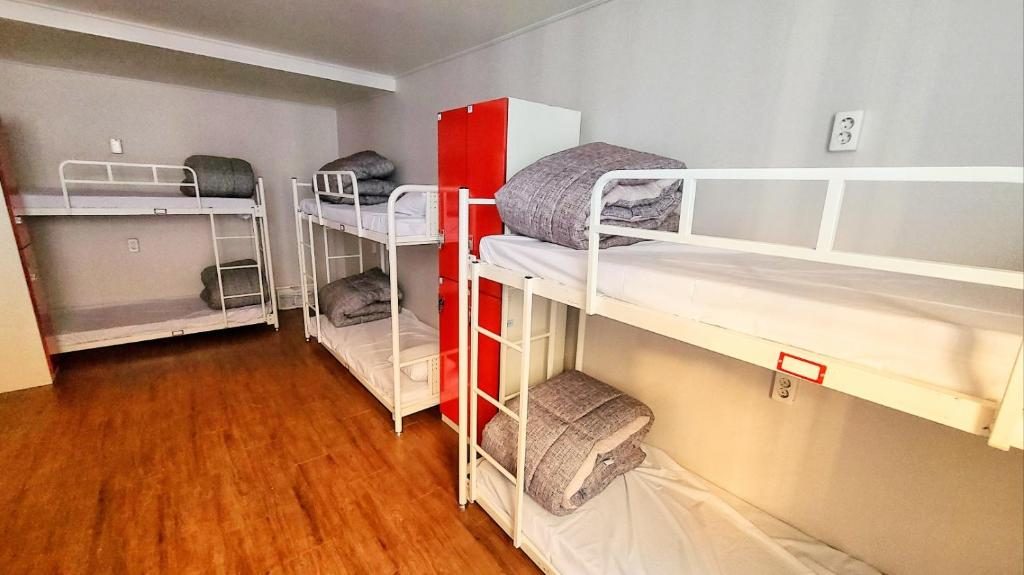
A hostel that mixes dorms and private rooms has two different cleaning clocks running at once. A private room turns over as a unit: everyone leaves, the room is cleaned, and the next guest arrives. A dorm turns over one bed at a time, while other beds in the same room are still occupied, with people sleeping, working on laptops, or hiding from the heat.
The schedule that works sorts tasks by deadline (the earliest moment someone needs that bed or room), not by room type or floor. On the board, a dorm is one card with a row per bed, and a private room is one card with one status. Both carry a visible "needed by" time. The rest of this article explains how to get there and the traps along the way.
We run guesthouses ourselves, so this comes from the daily grind rather than theory. The principles apply whether your board is a whiteboard, a spreadsheet, or software.
Why mixed properties are harder than pure ones
A hotel-style property has one unit of work: the room. A pure dorm hostel has mostly one too: the bed, plus a periodic room reset. A mixed property has both, and they interfere with each other in three ways.
- Different deadlines. A private room has one checkout and one arrival, so the window between them is fixed. A dorm bed has its own checkout and its own arrival, and six beds in one room can have six different windows.
- Different access. You can enter an empty private room any time. A dorm with sleeping guests needs quiet, light, and timing discipline.
- Different effort per visit. Changing one bed is a few minutes. Turning a private room with a bathroom is a different job. If you plan in "rooms cleaned", the numbers mislead you.
Most scheduling failures come from treating those as the same unit. A housekeeper walks into a dorm to change one bed, skips the other two that vacated an hour later, and gets called back at 3 pm.
Step 1: Define your task types
Before you build any schedule, write down the distinct jobs. Most mixed properties end up with some version of this list:
- Bed change: strip and remake one dorm bed after a checkout.
- Dorm reset: floor, bins, surfaces, and the shared bathroom or lockers, done once per dorm per day.
- Private turn: full clean and linen change after checkout.
- Stayover service: if you offer it, a lighter pass in a private room with guests staying on.
- Common areas: kitchen, lounge, corridors, shared bathrooms.
- Deep clean or maintenance hold: a room out of service for a defined period.
Time each type on your own staff for a week. Don't use a number from a blog post, including this one. Your layout, bathroom ratio, and bed type (bunks with ladders versus floor-level beds) change the answer a lot.
Step 2: Give every task a "needed by" time
This is the single most useful change you can make. For each dirty bed or room, the board should answer one question: when does somebody need this ready?
- Private room with a same-day arrival: needed by that guest's check-in time, or the earliest time you'd realistically hand over a key if the guest arrives early.
- Dorm bed with a same-day arrival: needed by the guest's expected arrival. If you don't know it, use your standard check-in opening time.
- Bed or room with no arrival today: no deadline. These fill gaps in the day and should never jump ahead of a deadline task.
Now sorting is mechanical. Earliest deadline first. A dorm bed needed at 2 pm outranks a private room needed at 4 pm, even though private rooms feel like "real" turnovers.
Step 3: Batch dorm work by room, not by bed
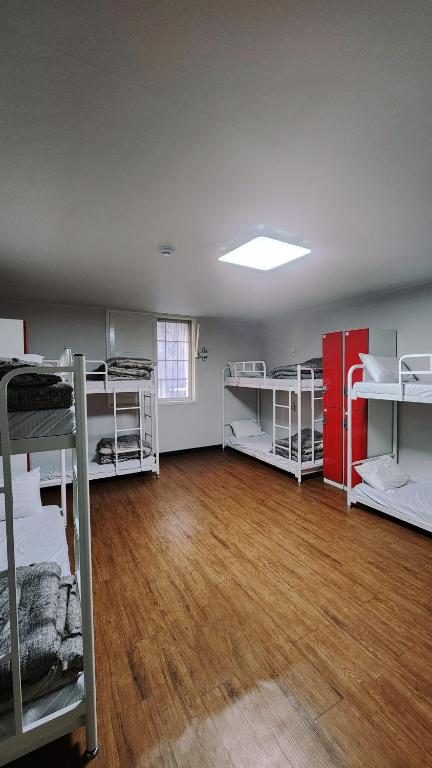
Deadline-first ordering has one exception, and it matters: walking into a dorm repeatedly is expensive, in time and in guest annoyance. The rule is to batch bed changes per dorm into as few visits as the deadlines allow.
In practice:
- Set a checkout cut-off (for example, 11:00 or whatever your policy is). Beds vacated by the cut-off go into the first dorm pass.
- Beds still occupied at the cut-off are marked "late" and get a second, short pass if they have an arrival deadline. If they have no deadline, they wait until the next day's reset or the afternoon sweep.
- Do the dorm reset (floor, bins, surfaces) in the same visit as the first bed changes, so the room is only disturbed once in the morning.
Private rooms don't need batching. Their order can follow deadlines strictly, which is why they are good for filling the time around the dorm pass.
Step 4: A sample morning (illustrative only)
The times below are an invented example to show the shape of the sequencing, not a benchmark. Imagine two housekeepers, two dorms, and four private rooms.
| Window | What gets done | Why in this order |
|---|---|---|
| Opening to cut-off | Common areas; private rooms already vacated with early arrivals; stayover services | Dorms are still full of sleepers. Private rooms and shared spaces are free to work in. |
| Just after cut-off | One dorm pass per dorm: all vacated beds plus the room reset | Most checkouts are done, so one visit covers most of the work. |
| Midday | Remaining private turns, in order of arrival time | Pure deadline sorting, with no batching needed. |
| Early afternoon | Second pass for late-checkout dorm beds that have arrivals | Short, targeted, only where a deadline exists. |
| Before evening arrivals | Final check of every bed or room with an arrival tonight | The board shows red if anything with a deadline is still dirty. |
Notice what the structure does. Dorms get one planned disturbance in the morning and one optional one in the afternoon, and private rooms absorb the schedule's flexibility.
Step 5: Organise the board around status, not just location
A cleaning board fails when the person holding the mop can't tell what to do next without asking reception. Here's a layout that holds up in mixed properties.
One card per room, one row per bed for dorms
A private room card has a single status. A dorm card contains one line per bed, each with its own status, plus a room-level line for the reset. This matters because "Dorm 2: dirty" is meaningless. "Dorm 2: beds 3 and 5 to change, bed 4 occupied, bed 6 arriving 15:00" is a work order.
Use a short, shared status vocabulary
| Status | Meaning |
|---|---|
| Occupied | Guest in bed or room. No work unless stayover service is due. |
| Vacated, dirty | Checked out, awaiting cleaning. |
| In progress | Someone is on it. Prevents two people starting the same job. |
| Clean | Done by housekeeping. |
| Inspected / ready | Optional second check. Useful for private rooms. |
| Out of service | Maintenance or deep clean. Not available to sell or assign. |
Skip the inspection step for individual dorm beds, since the overhead isn't worth it. Keep it for private rooms and for dorm-level resets if you want it.
Show the deadline on the card
Next to each dirty bed or room, show the earliest arrival or "none today". Colour or sort by it. If you keep one habit from this article, make it this one.
Group by zone for walking, sort by deadline for priority
If your property has several floors or buildings, show zones as a filter, not the main structure. Staff should see their zone, with the deadline order within it. Otherwise one person has to walk up and down stairs because the list is sorted by room number.
The things that break the schedule
A neat plan at 8 am rarely survives to noon. These are the usual disruptions, and your board should handle each one without a conversation.
- Late checkouts. The bed stays occupied, so it moves out of the first dorm pass. If it has an arrival today, it gets a second-pass slot.
- Early arrivals. A guest turns up at 11 am for a 2 pm check-in. Reception should be able to see whether their bed or room is already clean, and if not, raise its priority.
- Room moves and bed swaps. A guest asks to change bunks, or you move someone because of a plumbing issue. Both the old and new bed are now work. If the board doesn't update, the housekeeper makes the wrong bed.
- Same-day bookings. A booking lands from an OTA at 12:30 for a bed that was marked "no arrival today". Its status silently gained a deadline. Anything printed in the morning is now wrong.
- Extensions. A guest who was due to leave decides to stay. A cleaner who works from a printed list will enter an occupied room.
That last group is why paper lists age badly in mixed properties. They are a snapshot of reservations, and reservations keep moving all day. Your board needs to read from the same source as your calendar.
Hygiene and guest-experience rules worth writing down

- Never strip a bed that might still be in use. Confirm checkout in the system or at the front desk first. "The bed looked empty" is how a guest's belongings end up in lost property.
- Quiet hours for dorm work. Decide when housekeeping can enter dorms with sleepers inside, and what to do about night-shift guests who sleep in the morning. A Do Not Disturb tag at the bed level avoids arguments.
- Lost property from beds goes to one place, logged by bed number and date.
- Bed-bug and damage reports need a way to take a single bed out of service without closing the whole dorm.
How to check that your schedule works
Don't rely on gut feeling. Take one week of your own records and calculate:
- How many dorm visits did each room get per day? Anything over two on a normal day suggests poor batching.
- How often was a bed or room with a deadline not ready when the guest arrived?
- How many tasks were done in an order that didn't match deadlines, and why?
- What is the labour time per task type, using your own stopwatch numbers?
Then rebuild next week's board using the rules above and compare. These are your numbers, so they will be more useful than any average from outside.
Where software helps, and what to look for
Plenty of properties run this on a shared sheet and do fine up to a point. The point usually comes when bookings arrive from several channels all day, and the person managing the sheet is also working the front desk.
When you evaluate hostel housekeeping software, check these specifically:
- Does it understand beds as individual units inside a dorm, not just rooms?
- Does the cleaning list update when a booking, extension, or move happens, without someone retyping it?
- Can housekeepers see only their own tasks, on a phone, without learning a complicated system?
- Can you take one bed out of service?
On our side, Kimchee has a bed-level calendar with room and bed layout, housekeeping management, and staff logins by name and 6-digit PIN with a dedicated housekeeping role, so cleaners see their own view without needing a full admin account. Bookings from your connected channels flow into the same calendar through the built-in channel manager, which is included in every plan. You can see the details on the features page and how the pieces fit together on how it works. If you want to know which OTAs feed the calendar, the channels page lists them.
We built it because we run mixed guesthouses ourselves, with both dorm beds and private rooms turning over every day, and a paper list never survived past lunch.
A one-page checklist to take away
- List your task types: bed change, dorm reset, private turn, stayover, common areas, out of service.
- Time each type on your own staff for a week.
- Give every dirty bed or room a "needed by" time.
- Sort by deadline, but batch dorm work per room after a checkout cut-off.
- Use private rooms to fill the gaps between dorm passes.
- Build the board with one card per room, and one row per bed for dorms.
- Use a short, shared status list and show the deadline on the card.
- Make sure the board updates when bookings, extensions, and moves happen.
- Review a week of records against your own numbers, then adjust.
If you'd like to see how this would look on your own room and bed layout, get in touch and we'll walk you through it.
Run it on a system built by operators
Kimchee is the PMS we use every day across three properties in Busan. The channel manager is included — no separate contract, no per-channel bill.